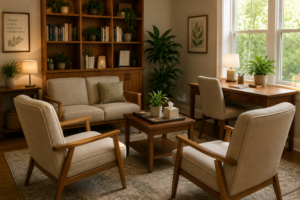

Sometimes healing begins with a rest reset.
Modern life is very stimulating — perhaps too stimulating. And I do not mean the obvious stressors: time pressure, money worries, the delicate dance of relationships. I mean our culture’s quiet addiction to being entertained. Watching, listening, scrolling, texting — constantly and relentlessly, for some of us.
In thirty years of practice, I have come to call this stimulation addiction. When I ask a patient to set aside a little time to truly rest their mind and body, they almost always tell me the same thing: they feel restless without something going on. If that rings true for you, then it is time to get some real rest.
What Real Rest Actually Means
Let me define it plainly. Real rest is to lie horizontally for at least 20 minutes — not concerning yourself with the outside world, not engaged in any important mental or emotional experience, and not feeling responsible for the past or the future.
In other words: just chill.
It sounds easy, but for most people it takes practice. This is one of the reasons rest sits at the very start of the Epigenetic Autoimmune Protocol (the Epi-AIP), in Phase One, Rest and Recover. We treat rest not as doing nothing, but as active healing — the importance of winter. Nothing green arrives in spring that was not restored in the quiet of winter. Real rest is that quiet, and it belongs to the Third Pillar of the Epi-AIP: Physical Fitness, Rest, and Sleep.
An Experiment to Try
Here is something I encourage patients to try.
As soon as you get home, connect with your family — then go and lie down in a quiet room with a cool towel over your forehead. Cover your eyes too, if you like. Relax deeply for at least 20 to 30 minutes. Feel into your body. Follow your breath.
There is real physiology behind this. When you lie still for more than 20 minutes, the blood that usually pools in your large “fight or flight” muscles returns to your gut. That shift signals your metabolism to move into the “rest and digest” response, which in turn releases the endorphins of relaxation and repair. You are not being lazy. You are switching your body into the mode where healing actually happens.
Why We Skip It — and Why That Costs Us
Most people come home wired from a busy day and go straight into the next thing: connect with family while making supper, clean up the mess, get everyone to bed, and then finally try to relax in the evening. And that “relaxation” usually looks like TV or the internet — which is really just another form of distraction.
The problem with living in a constant state of stimulation, especially when you are trying to improve your health, is that your nervous system never stands down. It stays alert. And when your nervous system is always nervous, you spend your vitality faster than you rebuild it. For anyone living with an Autoimmune Condition, that is exactly the wrong direction — chronic alertness feeds the very stress physiology we are working to calm.
If you come home and take 20 to 30 minutes of real rest first, the whole evening tends to go differently. You are far less likely to reach for a bottle of wine and a couple of hours of media to wind down, because you have already given your body what it was actually asking for.
What Changes When You Practice It
It is genuinely amazing to watch what happens for people who put real rest into practice.
- You make better meals, because you actually feel like cooking once you are rested.
- You have fewer family squabbles, because you are clear-headed and patient enough to keep the peace.
- You lean on fewer stimulants to get through a busy evening — and fewer intoxicants to calm down before bed.
- You sleep better and wake with more energy the next day.
This practice is especially challenging, and especially rewarding, for single moms and dads. Depending on your children’s ages, taking a little time after the hugs and giggles for some “single-parent yoga” can make the rest of the evening free of stress, conflict, and impatience.
A Gentle Note
Real rest is a wonderful daily habit, and it pairs naturally with everything else in the Third Pillar. But it is not a treatment for a medical problem. If you are struggling with serious insomnia, or you suspect something like sleep apnea, please see a qualified professional. Rest supports good care; it does not replace it.
Give it a try. Twenty minutes, horizontal, no agenda. It may just change your life.
▶ Explore the Third Pillar: Physical Fitness, Rest, and Sleep
▶ Book an Initial Consultation
The information on this website is provided for general educational purposes. It is not a substitute for individualized medical advice, diagnosis, emergency assessment, or treatment from your physician or another qualified healthcare professional.